

What I Wish I'd Known About Menopause at 47 (Now I'm 54)

October is Menopause Awareness Month, and I've been thinking a lot about the woman I was seven years ago.
Because at 47, I knew virtually NOTHING about menopause.
And I mean absolutely nothing.
I didn't know what age it normally started. I didn't understand the symptoms. I didn't know what perimenopause was, or how it might affect my body.
And perhaps most surprisingly, I'd never really thought about it.
I remember having a conversation with my husband, Mike, who said something along the lines of:
"But surely you know about menopause? You're a woman! You must have been taught about it, or read about it somewhere?"
He wasn't being unkind. He was genuinely surprised.
And do you know what?
So was I.
Because when I really thought about it, the answer was no.
Nobody had taught me about menopause.
I couldn't remember conversations about it with friends or family. It wasn't something I remembered hearing discussed openly in the media.
It was almost as though this enormous transition that approximately half the population would experience was something we were just expected to understand.
Except I didn't.
And looking back now, I wish I'd known so much more.
My menopause didn't arrive with an obvious announcement
My story began around 2018.
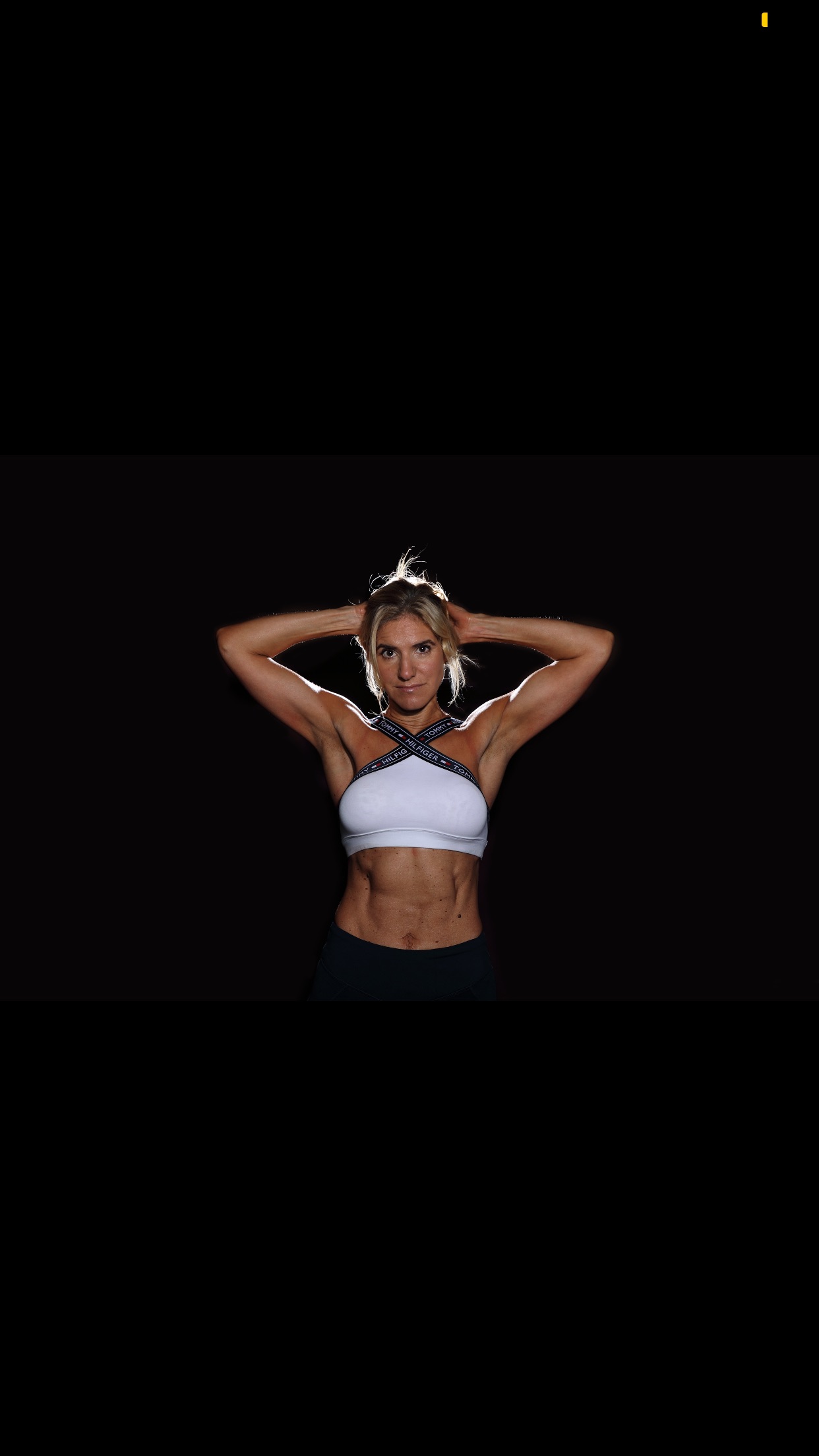
I'd lost a significant amount of body fat (dropped down to just 17%) and was probably at one of the fittest points of my life.
I was also taking the contraceptive pill.
Then after my husband had a vasectomy, I stopped taking the pill.
But my periods never returned.
And that was confusing.
Was it menopause? Was it connected to the significant weight I'd lost? Was something else happening?
I honestly didn't know.
It didn't help that both my mum and sister had undergone hysterectomies when they were relatively young, so I didn't have their experience of a typical natural menopause to draw upon.
I didn't really have anyone to ask.
And because I'd been taking hormonal contraception, it wasn't straightforward to know when my natural menstrual cycle had changed.
Looking back, I now understand that hormonal contraception can mask some of the changes associated with perimenopause, and that significant weight loss or inadequate energy intake can also affect menstrual function.
At the time, though, I had none of that understanding.
I was simply trying to work out what was happening to my body.
I wish I'd known about menopause is that it looks different for every woman
I didn't even know that menopause could cause hot flushes!
And yes, I did begin experiencing some mild flushes, mostly in the evenings and was oblivious to the fact that is was connected to my changing hormones.
They weren't particularly troublesome though, and I didn't have a long list of other obvious symptoms either.... just no period!
What I didn't understand was that menopause can look completely different from one woman to another.
Some experience significant symptoms. Others experience relatively few.
Sleep disturbances, mood changes, joint discomfort, vaginal dryness, changes in sexual desire and difficulties with concentration can all occur, although not every symptom a woman experiences in midlife is necessarily caused by menopause.
There isn't one single menopause experience.
And I wish someone had explained that to me.
I wish I'd understood more about HRT and the choices available
When I first went to my GP, I was prescribed an HRT tablet.
There wasn't a blood test, and I didn't really question the treatment.
I'd taken the contraceptive pill for years, so taking another tablet didn't seem particularly unusual.
I simply went along with it.
It was only later, after Mike read an article about menopause treatment and hormone testing, that I began looking into the different options.
That was the first time I remember hearing terms such as bioidentical hormones.
I subsequently had blood tests, including testosterone testing, and discovered that my testosterone level was extremely low.
I went on to explore different HRT preparations and eventually moved to a treatment approach that suited me much better, with follow-up appointments and monitoring.
And for me, that made a real difference.
I began noticing improvements in how I felt, including my energy and ability to train.
But here's something important I've learned since:
HRT isn't right for everyone, and there are different formulations, doses, routes and alternatives to consider.
Testosterone treatment also has specific indications and isn't automatically appropriate simply because a blood test shows a low level.
What I wish I'd understood at 47 is that I could ask questions.
I could ask why a particular treatment had been recommended.
I could ask about the alternatives.
I could request a review if something wasn't working for me.
And I could be involved in making decisions about my own health.
You don't have to become a hormone expert. But you deserve to understand your options.
I wish I'd known that menopause wasn't the beginning of physical decline
Here's something that might surprise you.
Around this period of my life, I was probably at my absolute peak fitness.
I was running 10K in around 54 minutes.
I was achieving personal bests in my strength training.
I was strong, lean, fit and pushing myself physically.
And I loved it!
So when I hear women talk about menopause as though it marks the beginning of inevitable physical decline, I want to challenge that idea.
Yes, ageing and hormonal changes can affect muscle, bone health, body composition and recovery.
But that doesn't mean we have to stop progressing.
We can still build strength, improve fitness, challenge ourselves and achieve things we're incredibly proud of.
In fact, maintaining muscle becomes even more important as we get older.
Not simply because we might want to look a certain way, but because muscle supports our mobility, strength and independence.
I want to be able to lift weights, run, walk, travel and enjoy an active life for as many years as possible.
I don't just want to add years to my life.
I want to add life to my years.
And strength training is a huge part of that.
I wish I'd understood that more exercise and less sleep weren't badges of honour
Here's another confession.
Back then, I was training HARD.
Six days a week, pushing myself, chasing personal bests and probably not giving nearly enough thought to recovery.
And then there was the whole 5 a.m. Club thing!
Does anyone remember when getting up at 5 a.m. seemed to be the ultimate badge of honour?
The earlier you got up, the more disciplined, productive and successful you apparently were!
I completely bought into it.
I'd get up ridiculously early, fit in my personal development, meditation, journaling and exercise, and feel rather pleased with myself for getting so much done before most people were even awake.
But looking back now, I honestly wonder what on earth I was thinking!
Because here's what I didn't fully appreciate at the time.
Sleep and recovery aren't things you earn after working hard. They're essential parts of looking after your health.
When we're training regularly, our bodies need time to repair, adapt and recover.
And consistently sacrificing sleep to squeeze more into the day can work against the very things we're trying to achieve, including our energy, training performance and overall wellbeing.
This becomes particularly relevant during midlife, when sleep can already be disrupted for some women experiencing menopause symptoms.
These days, I still love my morning routine.
Personal development, learning and taking a little time for myself remain incredibly important to me, and I do them pretty much every day.
But there's one big difference.
I no longer sacrifice sleep just so I can say I got up at 5 a.m.
If I need more sleep, I take it.
If that means shortening my journaling or meditation, so be it.
And I've learned that rest days aren't a sign that I'm being lazy or losing discipline.
They're part of training intelligently.
If I could tell my younger self one thing about all those early mornings and relentless workouts, it would be this:
You don't need to do MORE to prove you're looking after yourself. Sometimes looking after yourself means doing LESS.
And I really wish I'd understood that sooner. ❤️
I wish I'd understood just how important nutrition becomes during menopause
One of the biggest things I've learned, both personally and through my work as a health coach, is that nutrition becomes increasingly important as we move through midlife.
At 47, I was very focused on being lean, maintaining a low body fat percentage and fuelling my workouts.
What I didn't fully appreciate was that good nutrition is about so much more than managing our weight.
As our hormones change during perimenopause and menopause, we can experience changes in body fat distribution, cholesterol levels and blood glucose regulation. Research also suggests that diet quality may be associated with how women experience certain menopause symptoms, although we're still learning about that relationship.
And while there's no magic menopause diet, there are some important things we can do to support our health.
Eating sufficient protein helps us maintain muscle, particularly alongside strength training. Fibre-rich foods support our gut health, cholesterol and blood glucose regulation. Healthy fats, particularly from foods such as olive oil, nuts and oily fish, support cardiovascular health, while calcium and vitamin D are important for maintaining strong bones.
But perhaps the biggest lesson for me was understanding that eating less doesn't necessarily mean eating better.
I'd spent years thinking about nutrition largely in terms of achieving a particular physique.
Today, my focus is very different.
Of course, I still help women lose unwanted body fat, but I want them to understand how to nourish their bodies, maintain muscle, protect their long-term health and feel their best.
Because at this stage of our lives, nutrition shouldn't simply be about getting smaller.
It should be about helping us stay stronger, healthier and more resilient for the years ahead.
I wish I'd started thinking about longevity sooner
As life went on, and particularly as health challenges affected people close to me, I found myself thinking more and more about what it really means to be healthy.
Not just today.
But in ten, twenty or thirty years.
I became increasingly interested in the relationship between nutrition, exercise, metabolic health, cardiovascular health, muscle, bone strength and ageing.
And that curiosity has shaped the direction of my coaching.
These days, when I work with women, of course I love seeing their physical transformations.
I love watching them lose unwanted body fat, drop dress sizes and feel confident in their clothes.
But what excites me just as much is seeing them become stronger.
Watching them discover what their bodies can do.
Helping them understand how to nourish themselves.
Seeing them develop habits that can support their health for years to come.
Because the goal isn't simply to look good for six weeks.
It's to build a healthier, stronger body for the rest of your life.
What I'd tell my 47-year-old self today
If I could go back and have a conversation with that woman who knew so little about menopause, here's what I'd tell her:
Don't be embarrassed by what you don't know.
Ask questions.
Learn about your body.
Don't assume that what worked for you at 35 will necessarily work in exactly the same way at 50.
Lift weights.
Don't confuse being as lean as possible with being as healthy as possible.
Learn to see food as something that nourishes and protects your body, not simply something to restrict or control.
Stop treating exhaustion as an achievement. Prioritise your sleep, embrace your rest days and remember that recovery is part of getting stronger.
Understand your treatment options and make informed decisions with your healthcare professional.
And above all…What I Wish I'd Known About Menopause: Don't believe for one moment that your best years are behind you.
Because they absolutely don't have to be.
At 54, I know more about my body than I ever did at 47.
I'm still learning. Still questioning. Still researching.
And I'm probably more passionate about women's health now than I've ever been.
If sharing my experience helps even one woman feel better informed, more confident about asking questions or more motivated to look after herself, then I'm very glad I've shared it.
And if you're navigating menopause yourself, I'd love to know:
What's the one thing you wish someone had told YOU?
Let's keep having these conversations.
Because no woman should have to navigate this stage of life feeling completely in the dark.
Jen x
A little support if you're ready to prioritise yourself
If you're looking for help with strength training, nutrition, healthy habits and accountability, I'd love to welcome you to one of my six-week challenges.
My approach is about more than weight loss. It's about helping women feel stronger, healthier, more confident and better equipped to look after themselves for the years ahead.
This article shares my personal experience and general educational information. Menopause symptoms and treatment decisions are individual. Please speak with an appropriately qualified healthcare professional about your own circumstances.


Comments