

Can you really change your body in just six weeks? Real advice for women over 40.
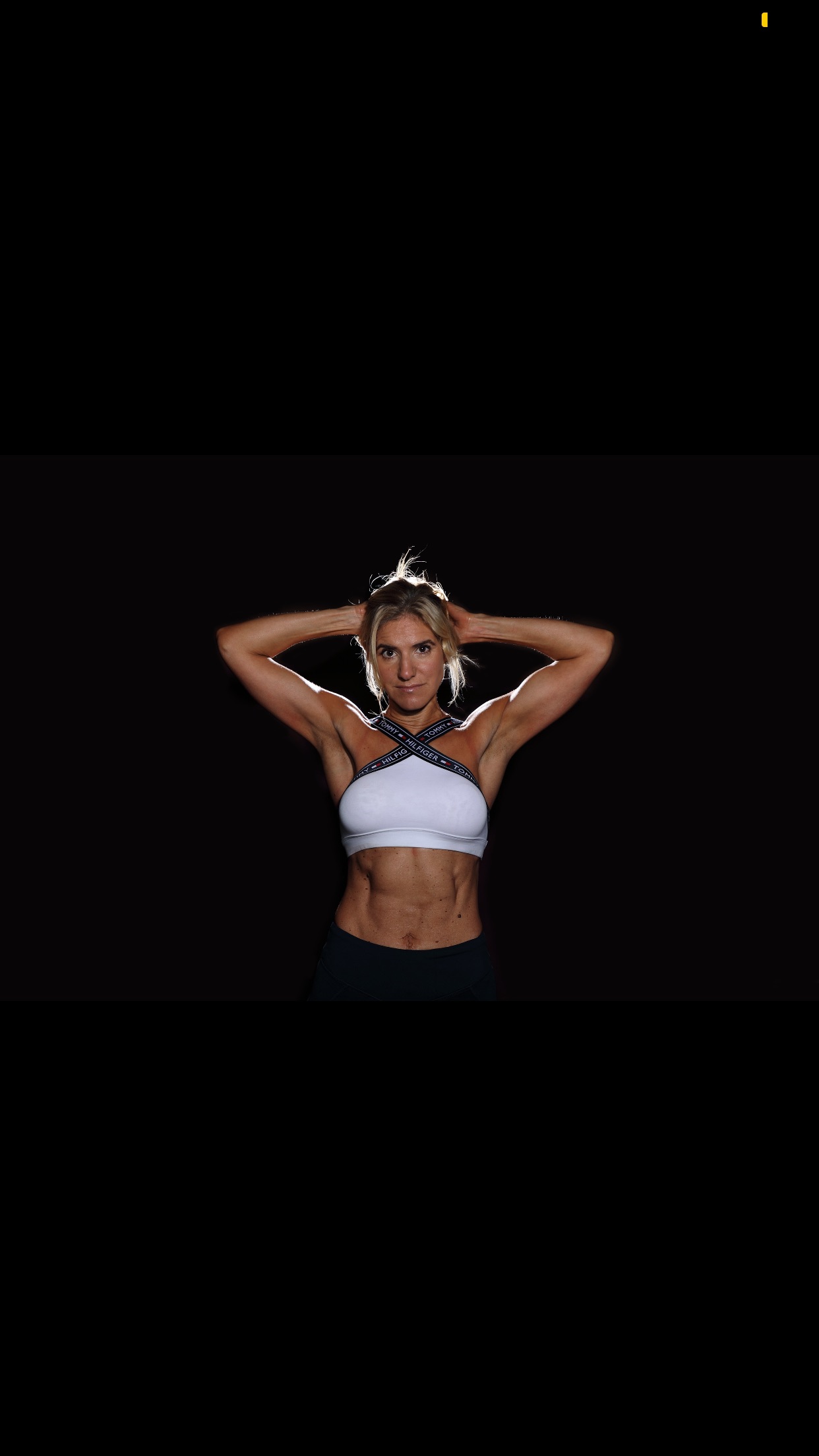

It's a question I get asked regularly, particularly by women in their 40s, 50s and beyond who feel that getting fitter, stronger or losing weight has become increasingly difficult.
And my answer?
You might be surprised by just how much can change in six weeks.
I've coached women who've lost 7–14 lb over six weeks, and some who've achieved even greater losses. I've watched women drop dress sizes, become noticeably stronger, improve their fitness and, perhaps most importantly, completely change how they feel about themselves.
Of course, everybody starts from a different place, and those results aren't guaranteed or necessarily appropriate for everyone.
But here's what I really want you to understand.
It's not just about the exercise.
In fact, if your goal is to lose body fat while becoming stronger and healthier, what you do in the kitchen can be just as important as what you do during your workouts.
Let's explore why.
What actually happens when you start strength training?
When you first begin resistance training, some of the earliest improvements happen in your nervous system.
Your brain becomes better at coordinating movements and recruiting the muscles needed to perform them.
That means you may find yourself getting stronger before you've built a noticeable amount of new muscle.
Exercises that initially felt awkward begin to feel more natural. Your balance and coordination can improve, and you may gradually find yourself lifting heavier weights or completing more repetitions.
As the weeks progress, consistent resistance training can also stimulate muscle growth.
And this matters enormously for women in midlife.
As we age, maintaining muscle becomes increasingly important for our strength, metabolic health, mobility and independence.
We don't just want to live longer. We want to stay strong enough to enjoy those extra years!
Your six-week strength training framework
If you're relatively new to strength training, you don't need an expensive gym membership or hours of exercise to get started.
Two or three well-structured sessions each week can be an excellent starting point.
Here's an example of how you could build your confidence and strength over six weeks.
Weeks 1–2: Learn the movements
Start with two full-body workouts each week, using bodyweight or light dumbbells.
Try:
Chair squats: 10–12 repetitions
Wall or incline press-ups: 8–10 repetitions
Standing hip abductions: 10 each leg
Supported single-arm rows: 10 each side
Dead bugs: 8 each side
Complete one or two sets of each exercise, concentrating on good technique.
The goal isn't to exhaust yourself. It's to learn how to move confidently.
Weeks 3–4: Build your strength
Once the movements feel more familiar, gradually increase the challenge.
You might progress to:
Suitcase squats: 10–12 repetitions
Reverse lunges: 8–10 each leg
Dumbbell chest presses: 10–12 repetitions
Bent-over dumbbell rows: 10–12 repetitions
Farmer's carries: 30 seconds
Aim for two sets, increasing towards three if you're recovering well.
Choose weights that make the final few repetitions challenging without compromising technique.
Weeks 5–6: Keep progressing
Now you can begin challenging yourself further.
Try:
Sumo squats: 10–12 repetitions
Static split squats: 8–10 each leg
Supported step-ups: 10 each leg
Dumbbell shoulder presses: 10 repetitions
Supported single-arm rows: 10 each side
Complete two or three sets, depending on your ability.
You don't have to change exercises every fortnight to make progress. Repeating familiar movements and gradually increasing resistance is often even more effective.
The secret isn't constantly finding new exercises. It's consistently challenging your muscles.
Allow recovery time between demanding sessions, and adapt exercises to your individual needs.
But here's where nutrition changes everything
This is the part I'm particularly passionate about.
Because whilst exercise is absolutely essential for strength, fitness and long-term health, exercise alone isn't always enough to achieve the body composition changes you're hoping for.
You can complete your workouts religiously, but if your nutrition isn't supporting your goals, you may become fitter and stronger without seeing much change in body fat. They say that 80% of your results come from nutrition and 20% from exercise. You cannot out train a poor diet.
That's because losing body fat generally requires an energy deficit over time.
And for the vast majority of people, it's easier to create that deficit through sensible dietary changes than through exercise alone. For context, to burn off 2 slices of toast wth baked beans, roughly 290 calories, you would have to run for 28 minutes. Or say, fish and chips, at around 820 calories, you would need to run 1 hour 21 minutes!
But please don't confuse that with starving yourself!
I'm talking about learning how to nourish your body properly.
That means:
Eating sufficient protein to support your muscles and recovery.
Including plenty of vegetables, fruit and fibre-rich foods.
Choosing nutritious, satisfying meals rather than constantly grazing.
Being mindful of portions and energy-dense extras.
Staying hydrated and supporting your recovery with adequate sleep.
Protein is particularly important when you're losing weight, because combining adequate protein with resistance training helps preserve valuable muscle.
And that's exactly what we want.
We want to lose excess body fat, not sacrifice the muscle we're working so hard to maintain and build.
Why the scales don't tell the whole story
One of the things I encourage my clients to understand is that body weight and body composition aren't the same thing.
You can become stronger, reduce your waist measurement and notice your clothes fitting differently without seeing dramatic changes on the scales.
Equally, weight can change quite quickly at the beginning of a new nutrition plan because of changes in water balance and glycogen stores.
That's why I love looking at progress from several angles.
How are your clothes fitting? Are you lifting heavier weights? Do you feel more energetic? Are you sleeping better? Do you feel more confident?
Those improvements matter too.
And whilst some of my clients have achieved significant weight loss over six weeks, everyone's starting point, rate of progress and individual needs are different.
The aim should always be meaningful, sustainable progress, not chasing somebody else's numbers.
Six weeks can be the beginning of something much bigger
There's another reason I love working in six-week blocks.
It's long enough to practise new routines, begin improving your fitness and see evidence that your efforts are making a difference.
But it's short enough to feel manageable.
You aren't being asked to commit to an entirely new life overnight.
You're simply saying:
For the next six weeks, I'm going to make my health a priority.
And here's something I've learned from coaching women over the years.
Knowing what to do and consistently doing it are two very different things.
Most of us know we should exercise, eat well and look after ourselves.
But life gets busy. Motivation disappears. Work becomes stressful. Family commitments take over.
And suddenly, those good intentions slip down the priority list.
That's where structure, support and accountability can make an enormous difference.
Not because you can't do it yourself.
But because sometimes having a plan to follow, workouts ready to go and people encouraging you makes showing up so much easier.
Want to discover how to change your body in just 6 weeks?
If you're thinking, “I'd love to do this, but I'd really like somebody to guide me,” then I'd love to invite you to join my next 6-Week Challenge.
You'll have:
30-minute home workouts, with videos to follow.
Structured nutrition guidance to support your goals.
Recipes, resources and practical tools.
My coaching, encouragement and accountability.
A supportive community of women working towards their own goals.
Because it's not just about exercising for six weeks.
It's about learning how to nourish your body, becoming stronger, building confidence and creating habits that can stay with you long after the challenge ends.
And you don't have to figure it all out on your own.
If you'd love to find out more about my next challenge, and help you change your body in just 6 weeks. Please do get in touch and I'll send you all the details.
Let's see what six weeks of looking after YOU can achieve. ❤️
Jen x


Comments